Student Team

Harsh Yadav
Crop Intelligence Team · Grade 12 · Orai
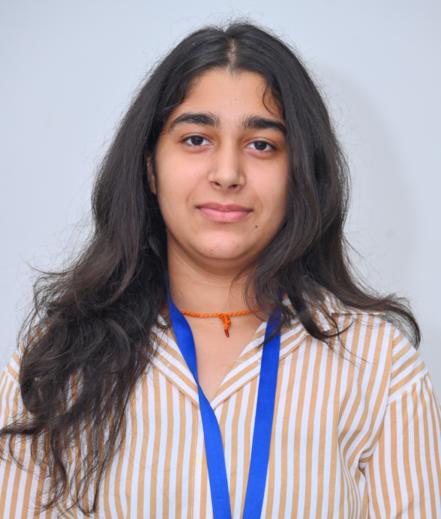
Myraa Malik
Crop Intelligence Team · Grade 11 · Delhi
An AI-powered platform for food security that uses visual analysis to detect crop disease, assess raw material quality, and estimate food purity across the journey from field to factory to consumer.
Crop disease can devastate a harvest within 48-72 hours. By the time visible symptoms appear, damage may already be irreversible.
Wrong pesticide use increases cost, damages soil, reduces yield, and weakens the next growing cycle.
Millions of smallholder farmers lack access to expert plant diagnosis, especially outside major cities.
The model serves three groups: farmers who need early disease detection, processors who need quality control at scale, and consumers who need trust and transparency in food.
Instant disease detection from a single photo, with severity scoring and treatment guidance.
Automated sorting of raw material by ripeness, damage, disease, and contamination risk.
Adulteration risk scoring and freshness signals for packaged and fresh food.
Users choose Farmer, Processing Company, or Consumer, and the interface adapts to that context.
Camera and image upload support instant visual analysis, including low-connectivity use cases.
The same scale communicates health, quality, or purity depending on the stakeholder.
0 means highly diseased and crop loss imminent. 7 means intervention is needed. 14 means healthy and ready for harvest.
0 means high contamination or damage. 7 means mixed quality requiring sorting. 14 means premium quality ready for processing.
0 means high adulteration or contamination risk. 7 means uncertain purity. 14 means highly pure and safe.
The model uses image and video datasets of crop disease, ripeness, damage, market food, processing facilities, and quality inspection workflows.
Users upload or capture photos of crops or food items.
The AI reads color, texture, shape, spots, damage, ripeness markers, and contamination signs.
Features are compared against trained disease, damage, and quality patterns.
The score changes meaning based on whether the user is a farmer, processor, or consumer.
Early-stage disease alerts, multilingual treatment guidance, and health scoring can reduce crop loss and unnecessary chemical use.
Vision-based sorting can reduce post-harvest waste and improve raw material consistency.
Food scans can reveal adulteration risk, residue indicators, and freshness ratings.
The project vision is a digital crop-security network connected to cooperatives, FPOs, agri-processing units, government schemes, and export bodies.
Deploy with regional cooperatives across five states and validate accuracy with field samples.
Integrate with industrial sorting infrastructure and onboard agri-processing units.
Build a nationwide digital crop-security network for Indian agriculture.