Current Research Interests
Dynamics, Interactions and Collective Response of Active Droplets
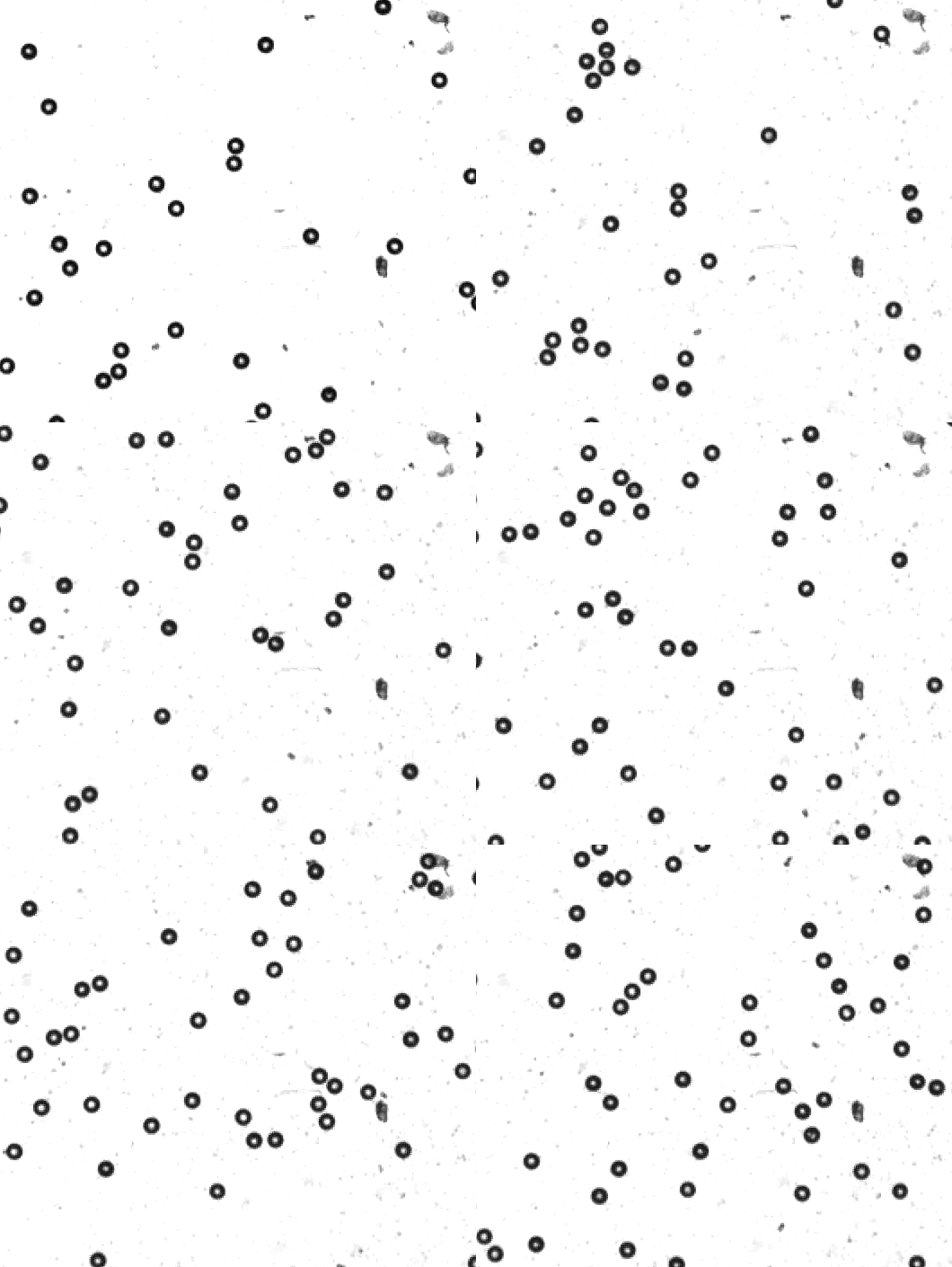
Droplets of an immiscible fluid (usually oil) in another immiscible fluid (usually water) are self-propelled via micellar solubilization based method which results in spontaneous Marangoni stresses at the droplet interface causing them to move autonomously. Currently we leverage the 5CB (oil) in aqueous TTAB based system to explore the complex dynamics of active droplet systems, with particular emphasis on how local interactions between droplets mediated by surrounding fluid flow and chemical gradients in complex environments and confined geometries affect their movement, navigation, and collective behaviours. Our investigations aim to uncover the mechanisms by which these interactions influence the self-organization, coordination, and cooperative activity of droplets.
Dynamics, Interactions and Collective response of Active Colloids
Collaborations:
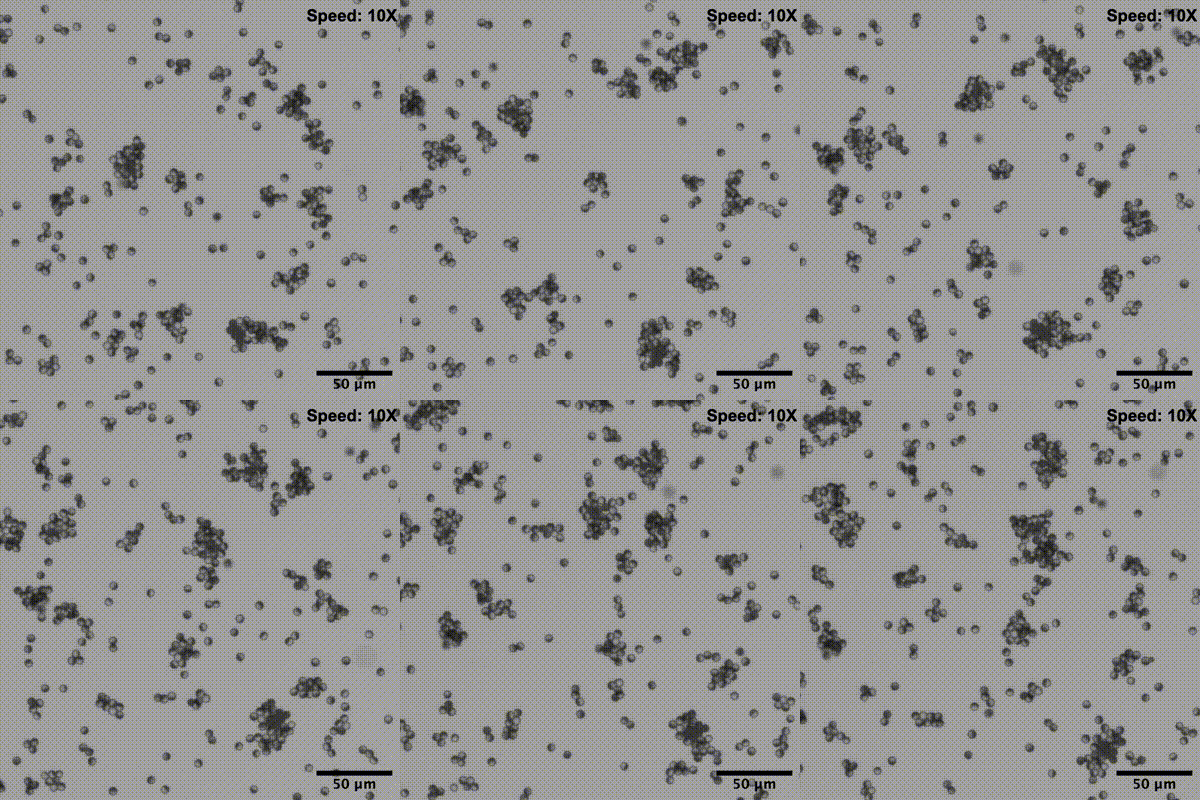
Using Janus Colloids (JCs) as building blocks we utilize self-generated gradients - chemical (or ionic) - to achieve self-propelled motion of JCs, a phenomenon widely recognized as self-diffusio(or electro)phoresis. In our lab we use self-diffusiophoretic motion of platinum (Pt)-based or gold (Au) based active Janus colloids in aqueous hydrogen peroxide solutions (with or without electric field), to understand the dynamics of these active JCs in diverse and complex environments such as external flows, crowded media with passive particles, and polymer solutions. Through these investigations we aim to unravel the fundamental principles governing active matter, shedding light on their potential applications in fields such as medicine, material science, microfluidics, and synthetic biology.
Autonomous delivery via LC Active Droplets
Collaborations:
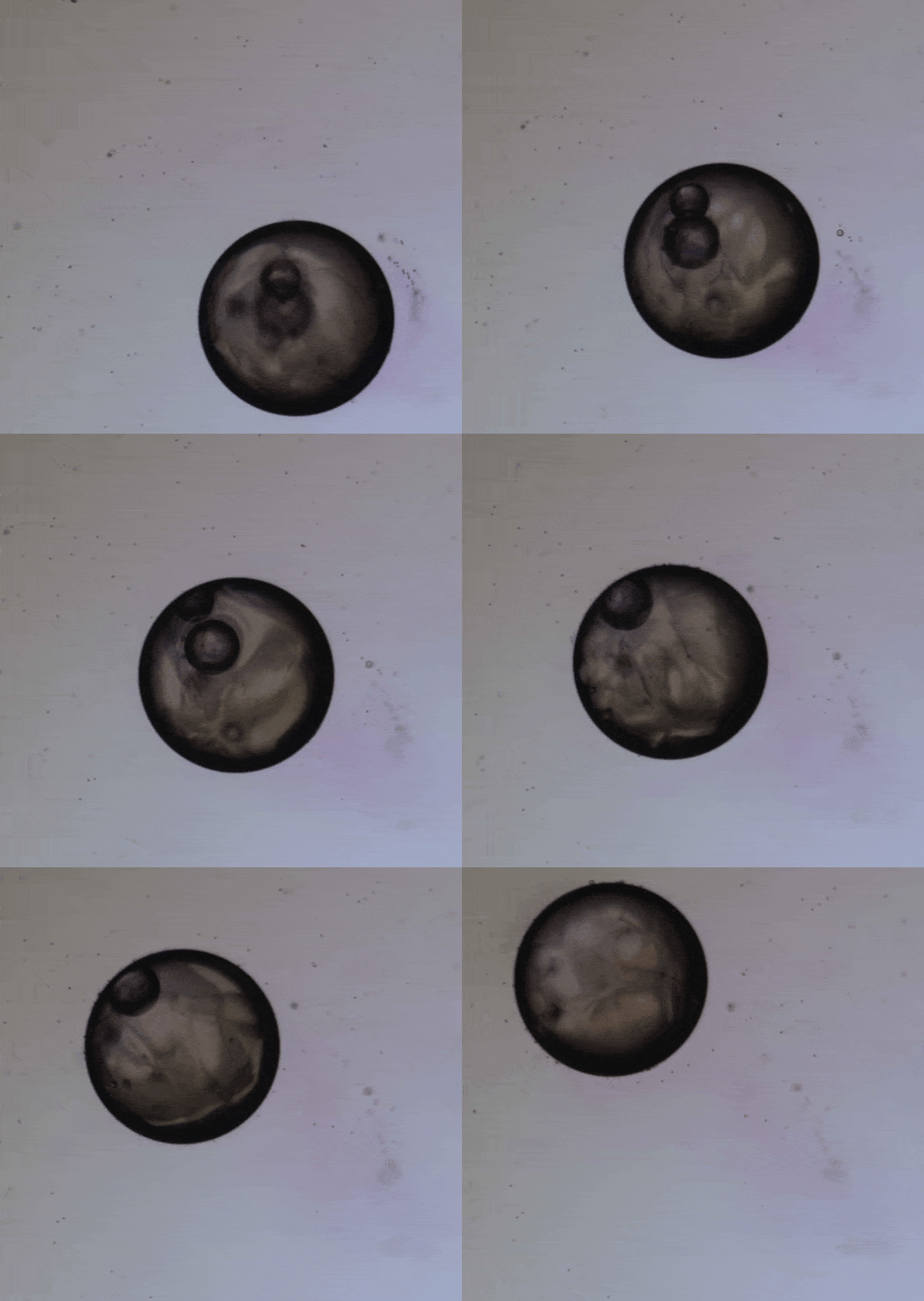
Liquid crystal (LC) active droplets offer a promising platform for targeted cargo delivery due to their unique combination of responsive anisotropic structure of LCs and self-propulsion capabilities. These droplets can encapsulate colloidal cargo within their interior and respond dynamically to external stimuli such as surfactants, temperature gradients, or chemical signals. The active flow generated at their interfaces—via Marangoni stresses—enables autonomous navigation through complex environments. Furthermore, the responsive nature of LCs allows controlled release of cargo upon encountering specific triggers, making them ideal for precision delivery in microfluidic devices, biomedical systems, and environmental remediation.
Responsive Liquid Cystalline polymeric films
Collaborations:
Liquid crystal elastomers (LCEs) are a class of smart materials that combine Liquid Crystal (LC) and elastomeric properties, offering several advantages, such as anisotropic properties, responsiveness to stimuli, tunable mechanical properties, and enhanced deformation with a high degree of control. Currently, we are working on fabricating LCE films and trying to study physical characteristics and topological defects or disruptions in the alignment of liquid crystal molecules within the elastomeric matrix caused by the interaction of LC molecules with Micro/Nano particles. Controlling the formation of these defects could unlock a wide range of opportunities for engineering advanced materials. These defects significantly influence the mechanical, optical, thermal, and actuation properties of LCEs. By tailoring particle characteristics, alignment, and interactions, researchers can harness these defects for innovative applications in soft robotics, photonics, and smart materials.
