

Research Focus Areas
Exploring Next-Generation Energy Storage & Conversion Technologies
Solid-State Electrolytes for Li-/Na-ion Batteries
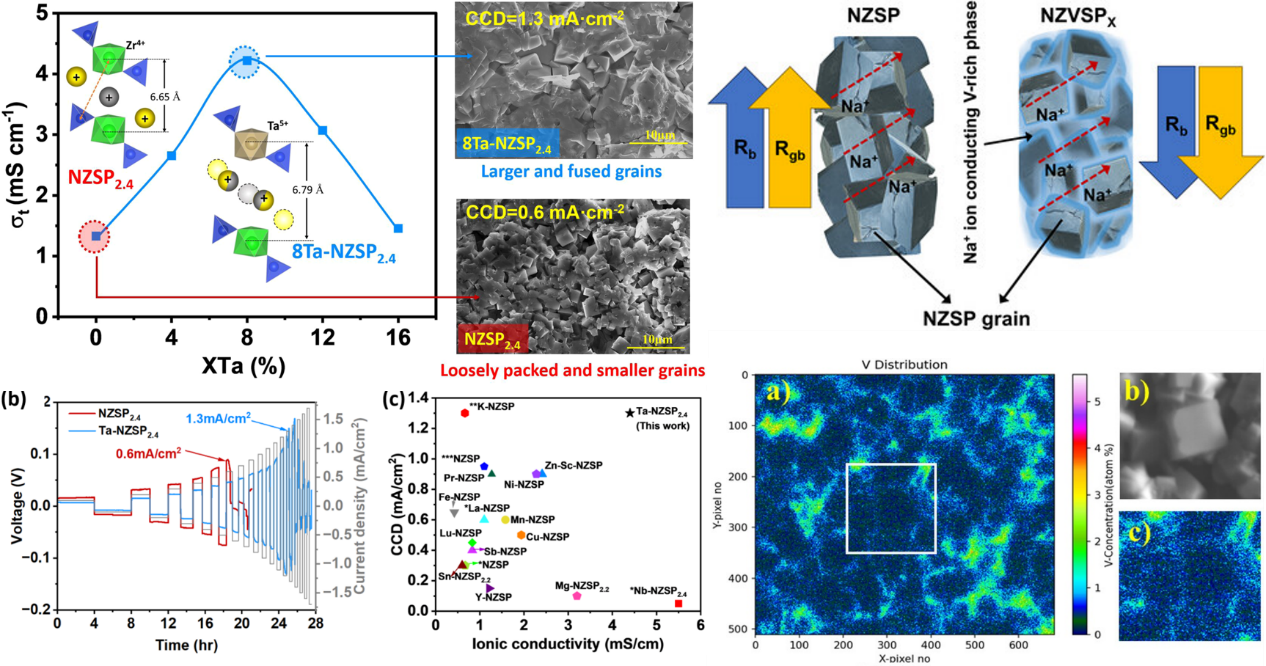
Our research focuses on the design and optimization of solid-state electrolytes for next-generation Li- and Na-ion batteries through a combination of materials synthesis, first-principles modeling, and electrochemical characterization. We investigate how composition, crystal chemistry, and defects influence ionic transport, using targeted doping strategies to enhance ionic conductivity, grain-boundary transport, and critical current density in NASICON-type electrolytes.
In parallel, we study lithium metal-based solid-state battery architectures, focusing on electrolyte-anode interfaces, thin lithium metal anodes, manufacturability, and techno-economic viability[cite: 8]. Overall, our goal is to develop safe, high-energy-density, and commercially scalable solid-state battery technologies by linking atomic-scale materials design with practical device implementation.
High-Performance Metal-Sulfur Batteries
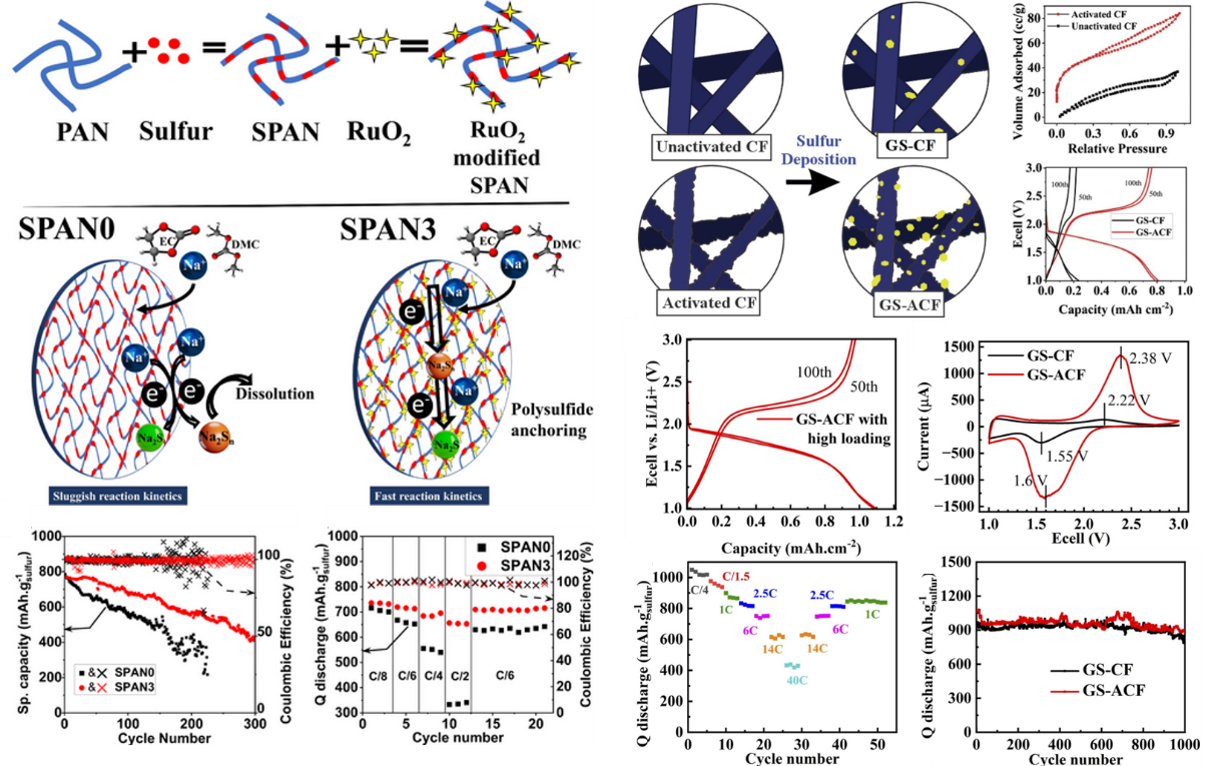
Developing advanced sulfur cathode architectures that enable high-capacity, long-life, and low-cost energy storage is critical to enabling metal-sulfur chemistries for next-generation batteries. Here, we engineer sulfurized polyacrylonitrile (SPAN)-based composite cathodes and incorporate catalytic additives to accelerate sulfur conversion reactions, suppress degradation, and improve cycling stability.
We also explore pathways to stabilize other polymorphs (e.g. monoclinic, gamma-phase) in carefully structured carbon-frameworks to achieve high specific capacities, high C-rate capabilities, and electrochemical cyclic stability. In parallel, we investigate the fundamental electrochemical and materials challenges governing sulfur-based batteries.
Organic & Polymer Composite Solid-State Electrolytes
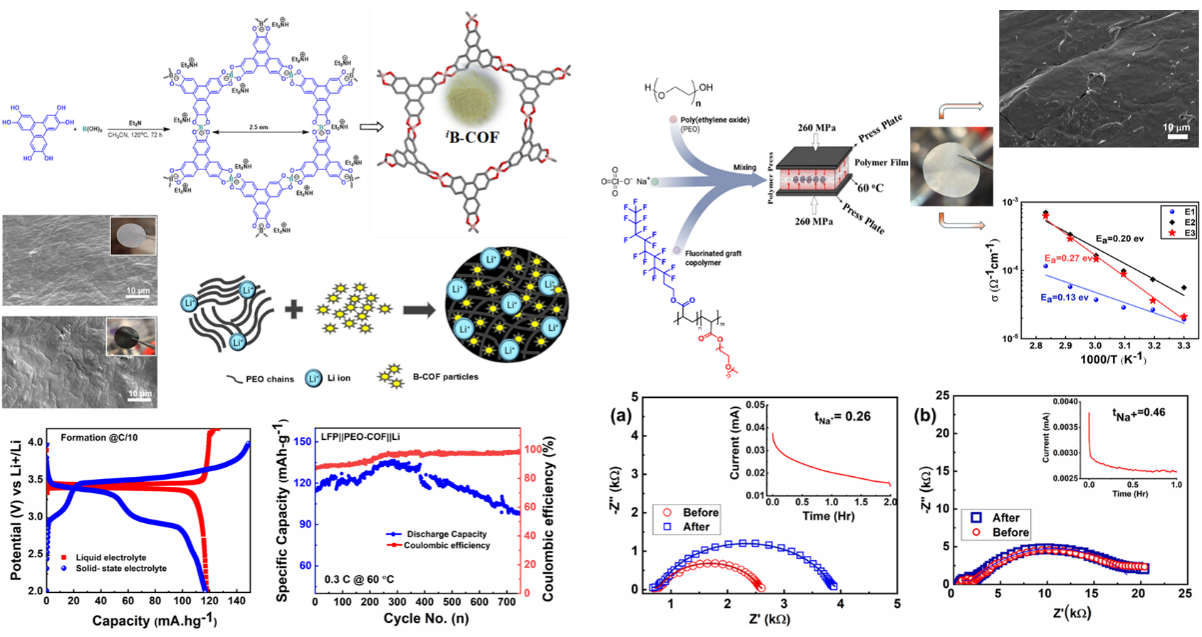
Organic and polymer composite materials are promising earth-abundant alternatives for solid-state electrolytes with the potential for being safe, flexible, and having high-performance ion-conducting properties for next-generation Li- and Na-ion batteries. We design advanced polymer electrolytes through molecular engineering, including fluorocarbon-containing graft copolymers and covalent organic framework (COF)-polymer composites.
By combining polymer chemistry, porous framework design, and electrochemical characterization, we seek to establish structure-property relationships that guide the development of scalable solid-state electrolytes. These materials also present opportunities to develop an all-organic battery system using organic cathode materials (such as PTO, COFs, etc.).
Advanced Characterization & Interfacial Evolution
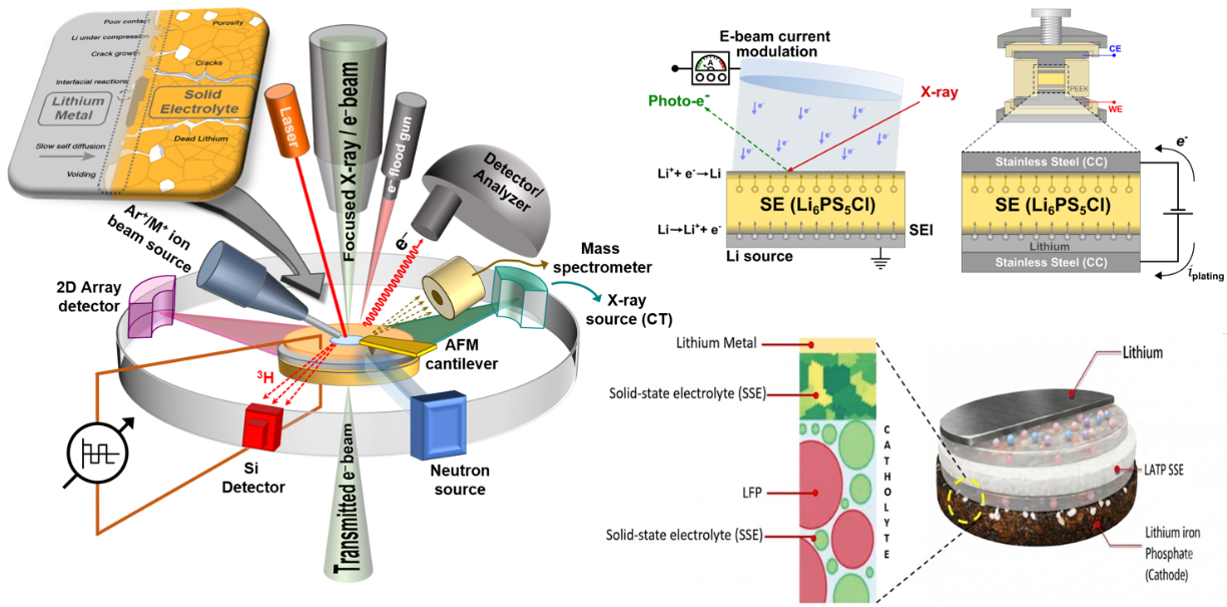
Evolution of materials and interfaces in advanced battery systems is highly dynamic and requires the use of a combination of ex situ, in situ, and operando characterization techniques to gain a mechanistic understanding during device operation. By integrating methods such as XPS, EIS, XAS, electron microscopy, diffraction, and vibrational spectroscopy, we investigate structural, chemical, and morphological changes across electrode-electrolyte interfaces.
In parallel, we employ operando synchrotron-based techniques to directly track oxidation-state changes, lithium-ion transport pathways, and interfacial degradation processes within functioning solid-state cells to guide the design of durable energy storage devices.